> [...] A would be read as “A per se A”, [...] I, similarly, would be “I per se I” [...] O would be “O per se O”
That's incorrect, these would have been respectively "per se A", "per se I", and "per se O." The confusion is coming from how the ampersand was listed out in the alphabet:
> The alphabet is A, ..., X, Y, Z, and per se and.
That doesn't mean "&" was spelled out as "and per se and" separately. The first and is because it's the last item in a list in a sentence. Only the second and is part of the full phrase of per se and. If you use it as a single item in a sentence, it works like this:
> The last letter of the alphabet is per se and.
The last sentence of the article:
> the alphabet once ended with a final “X, Y, Z, and & per se &”.
Should be:
> the alphabet once ended with a final “X, Y, Z, and per se &”.
Well, by the 19th-century mainly in (British?) English, according to those sources. By then had been abandoned in other European languages.
Britannica [0] says:
- invented by Romans c. 1st century BCE as a shorthand for 'et', can be seen from Pompeii
- was [also] prevalent in German manuscripts throughout the 19th century.
- gradually abandoned by most [non-English] languages by the end of the 19th century, with the notable exception of Gaelic, where it's also still used [as an evolution of the rival Tironian symbol].
and [1] has a really interesting illustration by Houston (1957) citing Tschichold (1953), showing the evolution of the ampersand over 2000 years, from Pompeii through 8th-C Merovingian Latin to modern-day.
> - was [also] prevalent in German manuscripts throughout the 19th century.
It's still common enough in Germany, but mostly used for company names if you combine two names. E.g. Müller & Schmidt. Which is why it's also called the "Kaufmanns Und", the "merchants' and".
also sometimes called "Et commercial" in french, so "commercial and". The official name is esperluette which has a nice and probably similar history as ampersand.
To anyone trying to figure out what the missing "Eyetests were a lot easier in the 1920s" image was referring to, here's a link to an archived version:
If you like this, I'd highly recommend the book, "Shady Characters: The Secret Life of Punctuation, Symbols, and Other Typographical Marks": https://a.co/d/iqGNnyi
Not on punctuation specifically but otherwise highly recommended Robert Bringhurst's "The Elements of Typographic Style" discusses the ampersand and its usage in great depth. Somehow Bringhurst's obsession with this character is almost uncanny.
In German, the & character is known as “kaufmännisches Und”, or “tradesman’s and”. For this reason, I used to believe that ampersand was really “amper’s and” and amper was somehow an obsolete word for tradesman.
Needless to say, that it not the case, but it felt very convincing.
In some latin languages we have a similar modern name ("e comercial" in portuguese, "y comercial" in spanish, "E commerciale" in italian), literally meaning "commercial 'and'". I'm not sure about the history about it though
Did you know that the term "computer" used to refer to an occupation? The same used to be true for audio amplifiers. It was a role traditionally occupied by the loudest shouter in the village.
I was visiting the V&A museum the other day and came across some stone typography carvings by Eric Gill - they include A-Z, 0-9 and also just &. I wonder if this is why? (However, the ampersand is still very much separate from the alphabet on the stone)
>I'm sure we could find other letters for the rest of them.
Looking at the number of pronunciations for the same letter sequence in English you'd probably need an alphabet with hundredsof letters to make this happen.
I'm afraid I can't remember why I began writing "&c" rather than "etc", although I know I now prefer it (rather than it merely being a matter of habit) since it neatly separates the "et" and the "cetera" and looks cute to boot. Do you remember where you picked up the practice?
Dots are used to denote that the previous character is an initial for a longer word. Since "et" is a whole word you only put the dot after the "c" that stands for "cetera" so "e.t.c" is kind of a hypercorrection like octopi, ignorami, or habañero.
It wasn't a letter of the alphabet any more than the dollar sign, the pound sign, or punctuation were letters of the alphabet. It wasn't used in words. All that happened is that someone decided to put it at the end of the alphabet song to teach it to children, and that's where it got the name.
> It wasn't a letter of the alphabet any more than the dollar sign, the pound sign, or punctuation were letters of the alphabet.
I'm not aware of historic English alphabets that include the dollar or pound sign or any sort of punctuation. On the other hand there is a lot of evidence of & being part of the alphabet. Wikipedia has or links to plenty of cases:
Old Saxon alphabet: despite being on an alphabet page, it’s very clearly separated from the letters.
I’m not at all convinced that it was ever what you might call a letter of the alphabet. Although it seems to not have been rare to group it with the letters in some way, I have received the impression it wasn’t particularly common, and that it wasn’t how people generally thought of it. Nowadays we would draw a clear distinction between letters, numbers and symbols (maybe we have more symbols? though certainly fewer ligatures/abbreviations like Ƿᵉ), and call the alphabet just the letters, but I get the vibe that maybe “alphabet” wasn’t so strictly just the letters. But I handwave liberally and provide no sources in this mostly-uneducated suspicion of mine.
I remember getting a rubber stamp set as a kid here in Australia, probably around time I started school in 1968. They definitely had an ampersand, dollar and cents stamp and even "No." (with the superscript o)
My understanding was that it's a ligature of the letters 'et', Latin for "and" (you can see it pretty clearly in some scripts, but it's not at all obvious in the typeface we're using here). But then, there used to be a letter for 'th', too.
Just had a browse of Wikipedia and am now more confused.
It states that the consonants of https://en.wikipedia.org/wiki/Romic_alphabet are the same as were adopted by IPA, except "⟨ñ ᵹ ɹ λ ꞁ⟩ were eventually replaced with ⟨ɲ ɣ ʕ ʎ ʟ⟩ in the IPA". No mention of ⟨θ⟩ in that sentence.
However, looking at the table on that page, the "th" in "think" is represented by ⟨þ⟩!
Nearly. There was an abbreviation for “th” that latter looked like “y” (not “ye”) and with the invention of the pressing press, the letter “y” was often used as a substitute for the “throne” character (the character that represented “th”). So “ye” means “the”.
Thanks for sharing this interesting history of the ampersand! It's always fascinating to learn about the origins of common symbols and phrases. I had heard that the ampersand was derived from the Latin word for "and", but I didn't know about its former status as a letter of the alphabet or the story behind its name.
> So the letter A would be read as “A per se A”, to ensure it was distinguished from the indefinite article a. The letter I, similarly, would be “I per se I” to differentiate it from the pronoun I. And the letter O would be “O per se O” to differentiate it from the interjection O!
But we don’t want et the letter et here, we want the word et.
The way I read the article is that the ampersand became a de facto 27th letter, so "and per se and" meant "the letter &", wheres "and" meant "the word and".
Yes re 27th letter, hence me writing that we want the word et (also known as ‘and’) not the letter. The author says the opposite in the part I quoted:
> The letter I, similarly, would be “I per se I” to differentiate it from the pronoun I
We want the word and/et in this case - we are saying 'John and Jane' not 'John (letter et) Jane'. So the author's logic is not consistent.
Or I'm missing something.
Alternative, more logical explanation (which may be garbage as it is unreferenced from wikipedia):
> It was also common practice to add the & sign at the end of the alphabet as if it were the 27th letter, pronounced as the Latin et or later in English as and. As a result, the recitation of the alphabet would end in "X, Y, Z, and per se and".
The Milk Carton Kids do a funny bit about this. https://www.youtube.com/watch?v=idpZRb8VP50 If you haven't heard of them and like singer-song writer with harmonies check em out.
Is it just me or is Haggard Hawk spouting ideas without citations? I don't know if they're right, but it would be cool if there were a link or two to an established source like an academic journal or even a Wikipedia page.
Interestingly enough, modern Hebrew adopted the sign. Even though it is not Latin-based / using the Latin alphabet. Probably as speakers knew it from other languages and the British mandate period
No, title is correct, the name of the letter was pronounced “and per se and”, which slurred into the modern “ampersand”, and since “Ampersand” is the subject of the first clause of the sentence and the second clause is a dependent clause connected by a conjunction, not an independent clause joined by a comma and a conjunction, the subject doesn’t need repeated: the “&” is just the conjunction “and” not a repetition of the subject “ampersand”.
But saying that the name of the character “&” was pronounced “and per se and” is like saying that the name of the character “Z” is pronounced “and zee” or “and zed”.
One could say whatever one wants but I think that in this case it’s actually a conjunction and I doubt anybody has ever said “I per se I” (Edited to add: actually that makes sense - for the letter i - but in a different context: spelling and not alphabet recitation. “c, a, r : car”, “i : I”. _letter_ (per se) : _word_)
Re "I doubt anybody has ever said I per se I" (in the context of alphabet recitation) may I draw your attention to this article[0]:
> Up until as recently as the mid 1900s, it was standard practice when reciting the alphabet to use the Latin phrase per se (literally “by itself”) to differentiate between individual letters of the alphabet—like A, I, and O—and single-character homographic words—like a, I and O.
> So the letter A would be read as “A per se A”, to ensure it was distinguished from the indefinite article a. The letter I, similarly, would be “I per se I” to differentiate it from the pronoun I. And the letter O would be “O per se O” to differentiate it from the interjection O!
How is it like saying "and zee"? The article pretty clearly outlines the logic here, and this would not be like that. If anything, it'd be "zee per se zee".
Because the alphabet was “a, b, …, x, y, z and &” (pronounced “… why zed and per se and”) and now it’s “a, b, …, x, y and z” (pronounced “… why and zed”).
You're missing that "& per se &" would still have been called that even if it wasn't the last item in the list. If the order was "...y, & and z" you'd pronounce it "why and per se and and zed".


.png)

_(V&A).jpg)
.jpg)
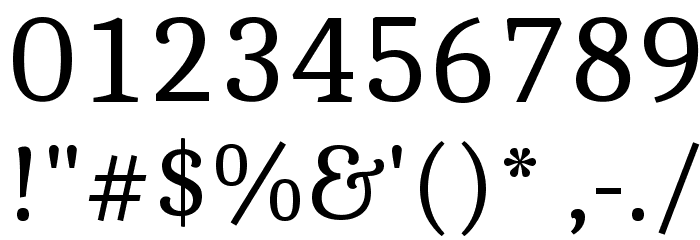

That's incorrect, these would have been respectively "per se A", "per se I", and "per se O." The confusion is coming from how the ampersand was listed out in the alphabet:
> The alphabet is A, ..., X, Y, Z, and per se and.
That doesn't mean "&" was spelled out as "and per se and" separately. The first and is because it's the last item in a list in a sentence. Only the second and is part of the full phrase of per se and. If you use it as a single item in a sentence, it works like this:
> The last letter of the alphabet is per se and.
The last sentence of the article:
> the alphabet once ended with a final “X, Y, Z, and & per se &”.
Should be:
> the alphabet once ended with a final “X, Y, Z, and per se &”.